

Mild Steel Plates in Bangalore: Complete Buying Guide (2026)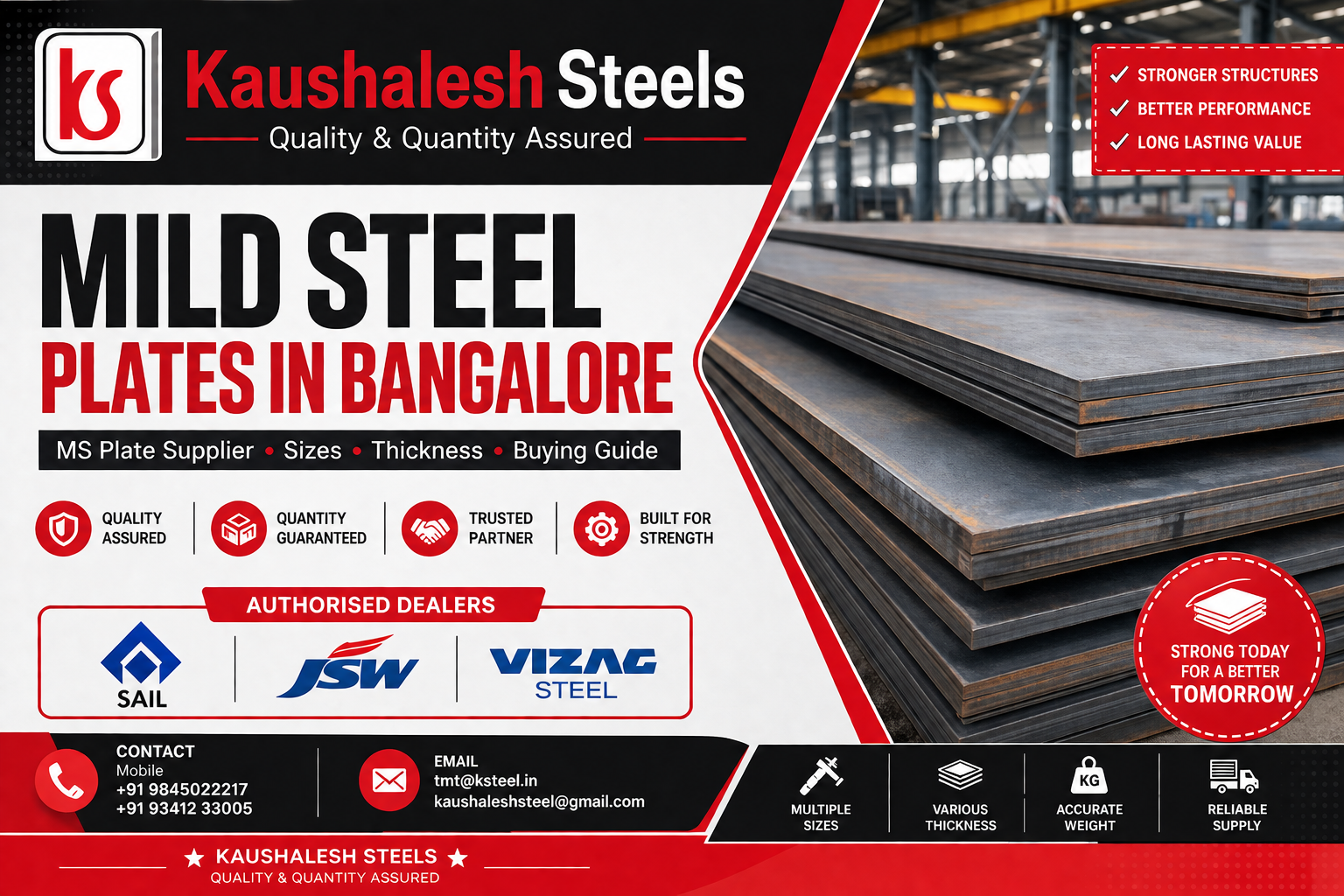
Whether you’re planning a commercial construction project, industrial fabrication work, heavy engineering application, infrastructure development, or manufacturing operation, selecting the right mild steel plates plays a vital role in ensuring strength, durability, safety, and long-term performance.
Mild steel plates are among the most commonly used structural steel products because they offer an excellent balance of strength, weldability, machinability, and affordability. They are suitable for fabrication, machinery, bridges, warehouses, industrial sheds, pressure vessels, platforms, storage tanks, automotive components, and countless engineering applications.
If you’re searching for Mild Steel Plates in Bangalore, understanding different plate grades, available thicknesses, sizes, applications, and price factors can help you make an informed purchasing decision. This comprehensive guide explains everything buyers, contractors, fabricators, engineers, and industrial businesses should know before purchasing steel plates.
What are Mild Steel Plates?
Mild steel plates, commonly referred to as MS Plates, are flat steel products manufactured using low-carbon steel. Their carbon content generally ranges between 0.05% and 0.25%, making them easier to cut, bend, weld, drill, and fabricate compared to high-carbon steel.
Due to their excellent mechanical properties, mild steel plates are widely used across construction, fabrication, manufacturing, transportation, engineering, agriculture, and infrastructure industries.
Key advantages include:
- Excellent weldability
- High tensile strength
- Good impact resistance
- Easy fabrication
- Cost-effective solution
- Long service life
- High load-bearing capacity
- Easy availability in multiple sizes and thicknesses
- Suitable for industrial and structural applications
Because of these advantages, mild steel plates remain one of the most preferred steel products for commercial and industrial projects.
Why Mild Steel Plates are Popular in Bangalore
Bangalore is one of India’s fastest-growing industrial and infrastructure hubs. The city has a strong presence in:
- Construction companies
- Manufacturing industries
- Industrial fabrication units
- Engineering companies
- Warehousing projects
- Metro rail development
- Commercial buildings
- Residential projects
- Heavy machinery manufacturers
- Automotive component manufacturers
These industries require high-quality steel plates for structural support, fabrication, machine bases, storage tanks, platforms, equipment manufacturing, and heavy engineering works.
Choosing the right supplier ensures timely delivery, consistent product quality, multiple size availability, and dependable support for ongoing projects.
Types of Steel Plates
Selecting the appropriate type of steel plate depends on the intended application. Different projects require different mechanical properties, finishes, and performance characteristics.
1. Mild Steel Plates
The most commonly used steel plates suitable for fabrication, structural work, machinery, construction, and general engineering applications.
Best for:
- Industrial fabrication
- Structural projects
- Machine manufacturing
- Warehouses
- Industrial sheds
- Construction projects
2. Hot Rolled Steel Plates
Hot rolled plates are manufactured at high temperatures, making them ideal for heavy structural applications where surface finish is less critical.
Common applications include:
- Bridges
- Heavy equipment
- Industrial structures
- Fabrication workshops
- Infrastructure projects
3. Cold Rolled Steel Plates
Cold rolled plates provide improved dimensional accuracy and smoother surface finish, making them suitable for precision engineering and manufacturing applications.
Ideal for:
- Automotive components
- Precision engineering
- Furniture manufacturing
- Industrial equipment
4. Chequered Steel Plates
Chequered plates feature raised patterns on the surface that provide excellent slip resistance.
They are commonly used for:
- Industrial flooring
- Staircases
- Walkways
- Platforms
- Loading ramps
- Vehicle flooring
- Factory safety areas
Why Mild Steel Plates are Preferred Over Other Materials
Compared to many alternative materials, mild steel plates offer a combination of strength, flexibility, and affordability that makes them suitable for a wide range of industrial and commercial applications.
| Feature | Mild Steel Plates |
|---|---|
| Strength | Excellent |
| Weldability | Excellent |
| Fabrication | Easy |
| Machining | Easy |
| Cost | Economical |
| Durability | High |
| Availability | Wide |
| Maintenance | Low |
| Recyclability | 100% Recyclable |
Available Mild Steel Plate Sizes
Steel plates are available in multiple standard dimensions to meet the requirements of construction, fabrication, and industrial projects.
Some commonly available plate dimensions include:
- 1250 × 2500 mm
- 1500 × 3000 mm
- 1500 × 6000 mm
- 2000 × 6000 mm
- Custom sizes (subject to availability)
The appropriate plate size depends on project specifications, fabrication requirements, structural load, and cutting requirements.
Mild Steel Plate Thickness Guide
One of the most important factors while purchasing mild steel plates is selecting the correct thickness. The right thickness depends on the type of application, expected load, structural requirements, fabrication process, and engineering specifications.
Generally, mild steel plates are available in various thicknesses, including:
| Plate Thickness | Common Applications |
|---|---|
| 3 mm | Light fabrication, cabinets, brackets |
| 4 mm | Industrial fabrication |
| 5 mm | Structural fabrication |
| 6 mm | Machinery manufacturing |
| 8 mm | Industrial platforms |
| 10 mm | Heavy fabrication |
| 12 mm | Construction structures |
| 16 mm | Heavy engineering |
| 20 mm | Industrial equipment |
| 25 mm & Above | Bridges, pressure vessels, infrastructure |
The ideal thickness should always be selected according to the structural design and engineering requirements of your project.
Mild Steel Plate Weight Chart (Reference)
Understanding plate weight helps estimate transportation costs, fabrication expenses, and overall project budgeting.
| Thickness | Approximate Weight (Kg/m²) |
|---|---|
| 3 mm | 23.55 |
| 4 mm | 31.40 |
| 5 mm | 39.25 |
| 6 mm | 47.10 |
| 8 mm | 62.80 |
| 10 mm | 78.50 |
| 12 mm | 94.20 |
| 16 mm | 125.60 |
| 20 mm | 157.00 |
| 25 mm | 196.25 |
Note: Weight values are approximate and may vary depending on manufacturing standards and tolerances.
Common Grades of Mild Steel Plates
Different grades are manufactured for different industrial applications.
Some commonly used grades include:
- IS 2062 E250
- IS 2062 E350
- ASTM A36
- EN Standard Structural Steel
- Boiler Quality Plates (Special Applications)
The appropriate grade depends on load-bearing requirements, fabrication processes, environmental conditions, and project specifications.
Mild Steel Plates Applications
Mild steel plates are used across almost every industrial sector because of their strength, versatility, and ease of fabrication.
Construction Industry
Steel plates are widely used in:
- Commercial buildings
- Residential projects
- Industrial sheds
- High-rise structures
- Warehouse construction
- Factory buildings
Structural Engineering
Common applications include:
- Steel structures
- Support beams
- Base plates
- Industrial frames
- Fabricated structures
- Heavy-duty platforms
Heavy Fabrication
Fabricators use steel plates for:
- Machine frames
- Industrial equipment
- Conveyor systems
- Structural components
- Support assemblies
Infrastructure Projects
Steel plates are commonly used in:
- Bridges
- Flyovers
- Metro projects
- Railway infrastructure
- Airports
- Industrial parks
Manufacturing Industry
Manufacturers use steel plates for:
- Industrial machinery
- Equipment manufacturing
- Storage tanks
- Pressure vessels
- Production lines
- Fabricated assemblies
Automotive Industry
Steel plates are used in:
- Vehicle body fabrication
- Heavy vehicles
- Trailers
- Commercial vehicles
- Industrial transportation equipment
Agricultural Equipment
Common applications include:
- Farm machinery
- Harvesting equipment
- Storage systems
- Agricultural trailers
Chequered Steel Plates
Chequered steel plates are specially designed with raised surface patterns that improve grip and reduce slipping risks.
These plates are preferred in locations where worker safety and slip resistance are important.
Popular applications include:
- Industrial flooring
- Walkways
- Factory platforms
- Staircases
- Loading ramps
- Truck flooring
- Warehouse flooring
- Mechanical rooms
Their attractive appearance also makes them suitable for architectural and decorative applications.
Factors Affecting Mild Steel Plate Price in Bangalore
Many buyers search online for:
- Mild Steel Plate Price Bangalore
- Steel Plate Price Today
- MS Plate Price Per Kg
- Steel Plate Rate
- Mild Steel Plate Cost
However, steel prices are influenced by multiple factors and change frequently based on market conditions.
The following factors generally affect pricing:
- Plate thickness
- Plate dimensions
- Steel grade
- Quantity ordered
- Brand availability
- Market demand
- Transportation cost
- Bulk purchase volume
- Raw material prices
- Delivery location
Instead of focusing only on the lowest price, buyers should also consider product quality, material certification, stock availability, and supplier reliability.
How to Choose the Right Mild Steel Plate
Choosing the right steel plate helps improve structural performance and reduces long-term maintenance costs.
Before purchasing, consider:
✔ Project Type
Determine whether the plates are required for construction, fabrication, machinery, manufacturing, or infrastructure.
✔ Plate Thickness
Select the appropriate thickness according to engineering drawings and expected load.
✔ Material Grade
Choose the grade recommended by your engineer or project consultant.
✔ Surface Finish
Depending on the application, select hot rolled, cold rolled, or chequered steel plates.
✔ Quantity
Bulk orders often provide better pricing and consistent material availability.
✔ Reliable Supplier
Working with an experienced supplier helps ensure consistent quality, accurate dimensions, and timely delivery.
Industries That Use Mild Steel Plates
Mild steel plates serve a wide range of industries, including:
- Construction Companies
- Infrastructure Contractors
- Industrial Fabricators
- Manufacturing Plants
- Automobile Industry
- Warehousing Projects
- Power Plants
- Railway Contractors
- Engineering Companies
- Oil & Gas Sector
- Cement Plants
- Mining Industry
- Agricultural Equipment Manufacturers
- Shipbuilding Industry
- Heavy Machinery Manufacturers
Why Quality Steel Plates Matter
Using high-quality steel plates offers several long-term benefits:
- Better structural integrity
- Improved welding performance
- Higher durability
- Greater corrosion resistance (depending on finish)
- Longer service life
- Reduced maintenance costs
- Enhanced workplace safety
- Consistent fabrication quality
- Better project reliability
For industrial and construction projects, selecting certified steel plates from a trusted supplier can help ensure reliable performance throughout the life of the structure.
Frequently Asked Questions (FAQs)
1. What are mild steel plates used for?
Mild steel plates are widely used in construction, structural fabrication, machinery manufacturing, industrial sheds, bridges, storage tanks, pressure vessels, warehouses, and engineering projects because of their strength, durability, and ease of fabrication.
2. What thickness of mild steel plates is available?
Mild steel plates are commonly available in thicknesses ranging from 3 mm to 25 mm and above, depending on the application and supplier availability.
3. How do I choose the right steel plate for my project?
The right steel plate depends on your project type, load requirements, plate thickness, material grade, fabrication process, and engineering specifications. Choosing the correct dimensions and grade helps ensure long-term performance.
4. What factors affect mild steel plate prices?
Steel plate prices can vary based on thickness, dimensions, grade, quantity, market conditions, transportation costs, and order volume. Bulk purchases often provide better value than smaller orders.
5. What is the difference between a mild steel plate and a chequered plate?
A mild steel plate has a smooth surface and is commonly used for fabrication and structural work, while a chequered plate has a raised pattern that provides slip resistance, making it suitable for flooring, staircases, ramps, and platforms.
6. Are mild steel plates suitable for industrial fabrication?
Yes. Mild steel plates are widely used in industrial fabrication due to their excellent weldability, machinability, strength, and cost-effectiveness.
7. Which industries commonly use mild steel plates?
Industries such as construction, manufacturing, infrastructure, engineering, automotive, warehousing, agriculture, shipbuilding, railway projects, and heavy machinery manufacturing frequently use mild steel plates.
8. Can steel plates be cut and fabricated?
Yes. Mild steel plates can be cut, drilled, welded, bent, and fabricated according to project requirements, making them suitable for a wide variety of engineering and construction applications.
9. Why is supplier quality important when purchasing steel plates?
A reliable supplier helps ensure consistent quality, accurate dimensions, proper material grades, dependable stock availability, and timely delivery—factors that can significantly impact project timelines and performance.
10. Are mild steel plates recyclable?
Yes. Mild steel is fully recyclable and can be reused in future manufacturing processes, making it an environmentally responsible choice for construction and industrial projects.
Conclusion
Mild steel plates remain one of the most versatile and widely used steel products across construction, infrastructure, manufacturing, engineering, and industrial sectors. Their excellent strength, durability, weldability, and cost-effectiveness make them suitable for everything from structural fabrication to heavy engineering applications.
When selecting steel plates, it is important to consider factors such as plate thickness, dimensions, material grade, application requirements, and supplier reliability. Choosing quality materials helps improve project performance, reduce maintenance, and ensure long-term value.
Whether your requirement involves fabrication, commercial construction, industrial manufacturing, or infrastructure development, understanding the different types, sizes, applications, and buying considerations can help you make a more informed purchasing decision.